How European River Water Levels Can Ruin Your Cruise (And What Cruise Lines Won't Tell You)
While you are meant to glide seamlessly past historic European towns on a river cruise, regular travel readers will know that natural elements do not always cooperate. When rivers become impassable due to weather extremes, a high-end luxury voyage can quickly morph into an expensive coach tour with static hotel stays.
In this article, we look at how water level fluctuations impact river cruises, drawing on our recent experience sailing the Danube with Uniworld, alongside practical tips and FAQs to protect your travel plans.
TLDR: European river cruises offer an intimate, scenic way to explore historic cities, but extreme water levels can unexpectedly derail your itinerary halfway through the trip. On our Danube sailing with Uniworld, record-low river water brought our $9,000-plus cruise to an abrupt end in Vienna, replacing scenic sailing with long coach rides, hotel downgrades, and out-of-pocket costs. While weather disruptions are beyond any line's control, how a cruise line communicates, manages logistics, and treats stranded guests makes all the difference.
In our vlog above, you can see the real-time chaos as our Danube river cruise came to a grinding halt halfway through our itinerary in Vienna. While this written review breaks down the financial hit, hotel downgrades, and industry comparisons, the video captures the surreal feeling of staring at another ship's hull for three days and floating down an illuminated Budapest on a local charter boat.
How Do River Water Levels Impact European River Cruises?
River cruising relies on precise, narrow navigation corridors. If European waterways experience extended summer heatwaves or droughts, water levels drop too low for ships to clear shallow sandbars or riverbeds without grounding. Conversely, if heavy spring rains or rapid snowmelts flood the rivers, water levels rise so high that ships cannot fit beneath historic low-clearance bridges.
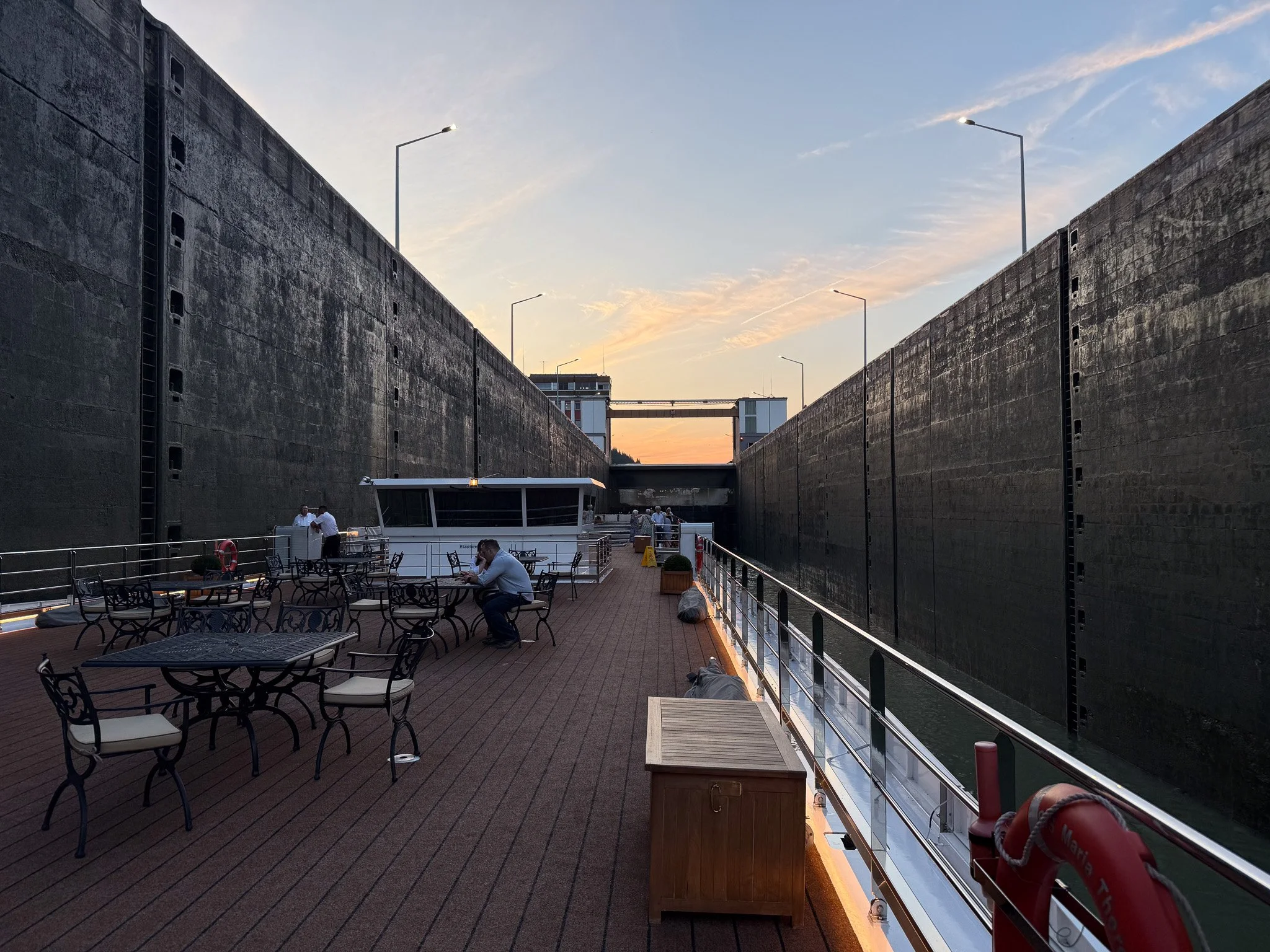
Uniworld Ship in a Lock
Unlike ocean sailing on ships from Royal Caribbean or Celebrity Cruises—where captains can easily alter course around bad weather—river ships are trapped on fixed routes. When a river closes to traffic, your floating hotel stops moving.
To make matters worse, low water levels force ships to "raft" or double-park directly alongside each other at crowded riverbanks. Oddly enough, after paying premium rates for a stateroom with a view, you might wake up to find your curtains opening two inches away from the metal wall or cabin window of another vessel. On our sailing, our French balcony view was completely blocked by another ship for three consecutive days in Vienna. We essentially paid over $1,400 a night to stay in a pitch-black inside cabin, completely stripped of daylight and scenic views.
See Also: The Ultimate Guide to River Cruising
What Happens When A European River Cruise Is Cancelled Halfway Through?
Cruise lines typically enact one of three contingency plans:
Coach substitution: Guests remain in hotels or on stationary ships and are bused to scheduled port destinations.
Ship swapping: Sister ships positioned on either side of the low-water obstruction swap passengers and crews, allowing the itinerary to continue by water.
Cancellation / Relocation: The cruise is curtailed early, and guests are moved to land-based hotel accommodations.
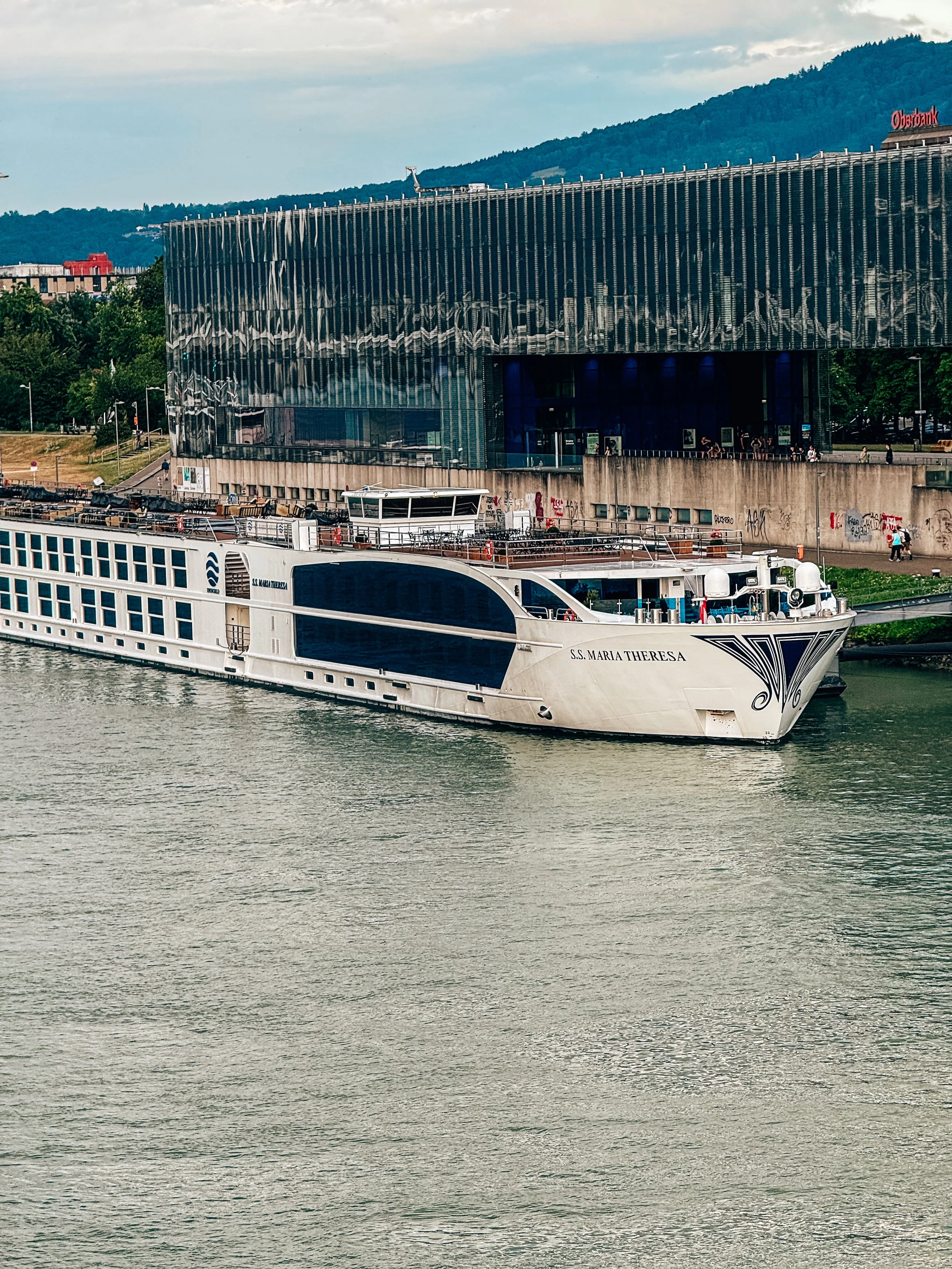
Our Uniworld Ship Docked in Germany
Coach Tours
When low water levels halted our Uniworld Danube sailing from Passau to Budapest, our luxury cruise abruptly turned into an impromptu motorcoach tour. Having paid nearly £7,000 ($9,000+ USD) for the two of us, our daily cost worked out to roughly $1,400 per night. At those prices, you expect seamless service, but the moment the ship got stuck in Vienna, the experience began to unravel.
Instead of sailing gracefully through Slovakia into Hungary, we had a coach tour to Slovakia one day, and then were instructed to pack our bags for a bus transfer to Budapest.
And honestly? If you're packing for a cruise, the last thing you want is to haul heavy luggage on and off coach buses midway through what was supposed to be a stress-free holiday.
Ship Swaps
Of course, how a water level disruption actually plays out depends entirely on the line you book, as every company manages river logistics differently. Mega-operators like Viking, they hold a massive advantage thanks to their huge, standardized fleet along major waterways like the Rhine and Danube, allowing them to pull off what the industry calls a "ship swap." This happens when two identical sister ships sail toward each other from opposite directions until they hit the impassable shallow patch or low bridge; passengers then simply pack their bags, take a quick coach transfer to the twin ship on the other side, and step right into the exact same cabin category and layout without missing a beat on their sightseeing schedule.
Cancelled Sailings
Smaller or boutique lines with limited fleet density can't pull off that kind of seamless swap, meaning if the river closes completely, your cruise could be converted into a land-based motorcoach tour or cancelled altogether—leaving you stuck in a shore hotel halfway through your itinerary.
What Other Hidden Drawbacks Of River Cruising Should You Know Before Booking?
River cruising is often marketed as an effortless vacation, but experienced cruisers know it comes with specific trade-offs compared to ocean ships. Keep these realities in mind before booking:
Intense Physical Pace: Unlike relaxing sea days on ocean liners like Holland America or Princess Cruises, river cruising is highly active. Expect early morning wake-up calls, miles of walking on uneven cobblestones, and frequent bus steps. If you have mobility restrictions, be aware that many river ships lack elevators servicing all decks.
Fixed Dining Schedules: River ships rarely offer 24-hour room service or flexible specialty restaurants like you'd find on Virgin Voyages or NCL. Meals happen at set times in a single dining room.
Severe Weather Dependency: If river levels drop or rise significantly, your river ship essentially becomes a floating hotel—or worse, a motorcoach tour.
Docking Noise and Zero Views: When ships raft together, generator fumes, noise, and blacked-out views are common.
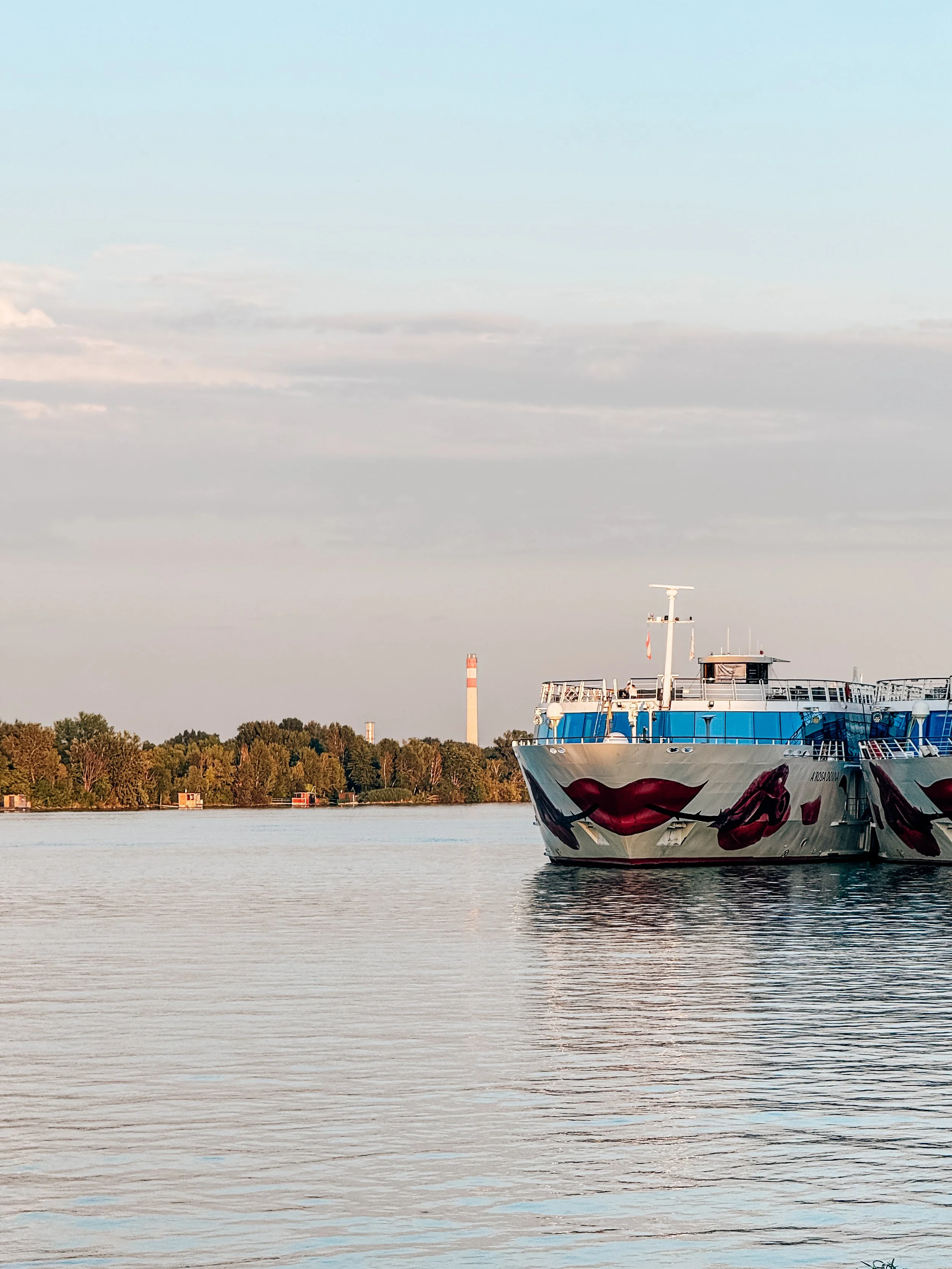
Rivker ships rafted together
Surprisingly, despite the logistics nightmare, the onboard product on Uniworld was remarkable up until the disruption. The regional food was exceptional, the crew were wonderful, and the bed—a hand-crafted Savoir mattress worth upwards of $50,000—was hands down the most comfortable bed we have ever slept on at sea or land.
Was There Any Silver Lining To Our Cancelled Danube River Cruise?
The good news is that Uniworld did manage one fantastic save once we arrived in Hungary. Recognizing that guests missed out on sailing into Budapest, they chartered a local excursion boat for a two-and-a-half-hour evening cruise down the Danube.
Sailing past the Hungarian Parliament Building at sunset as the golden lights turned on was genuinely special. The chartered boat was only half full, giving everyone room to move around, enjoy the included bar, and chat with fellow passengers.
It was a bittersweet moment. Guests who had spent seven days together were finally able to unwind, drink a glass of wine, and celebrate the end of a chaotic journey. It proved that even when an itinerary goes completely wrong, Europe’s iconic rivers still hold an undeniable charm.
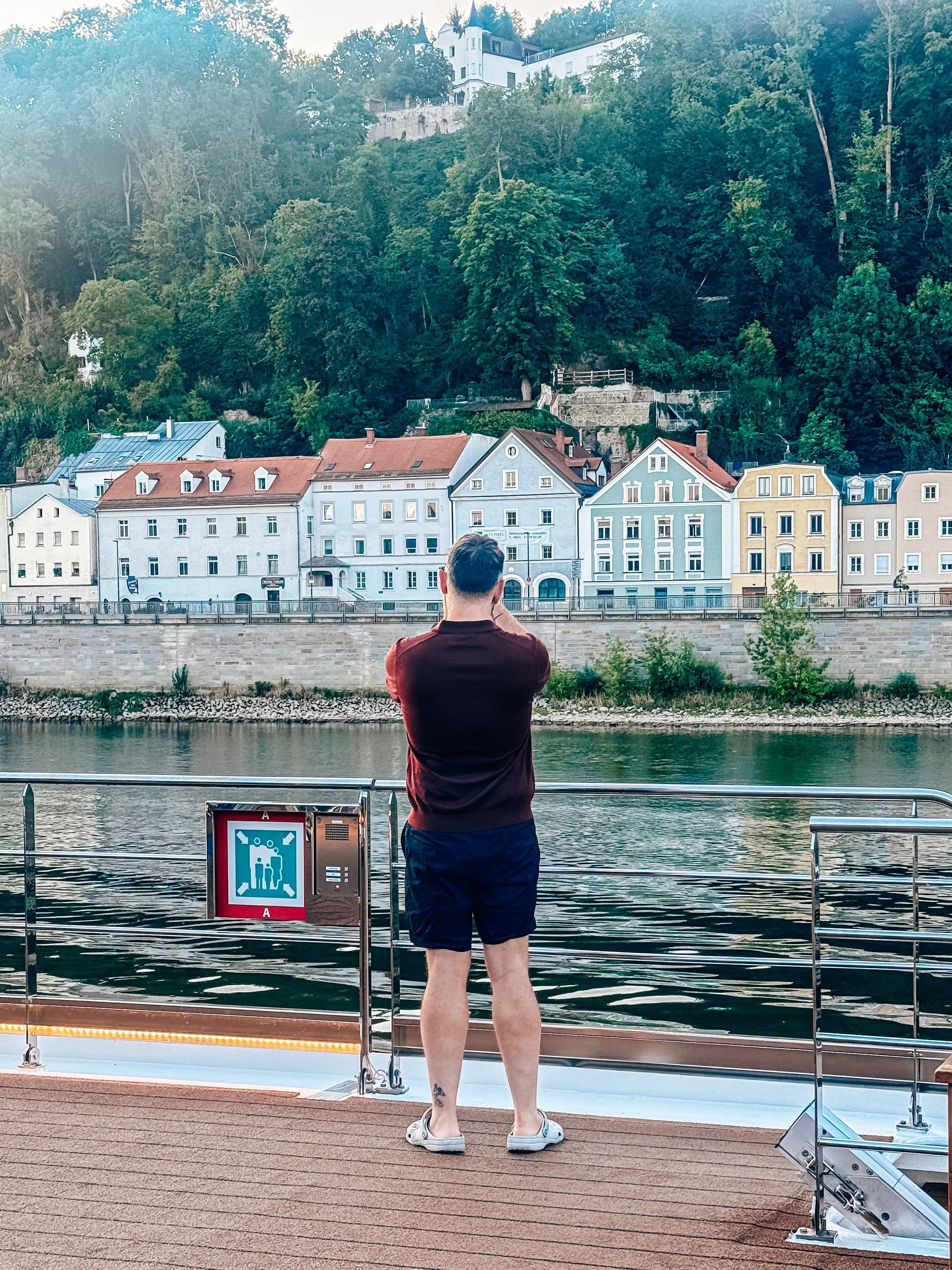
Enjoying the view from our River Ship
Frequently Asked Questions
Can river cruise lines guarantee your planned sailing itinerary?
No, weather conditions and river water levels are entirely beyond a cruise line's control, meaning itineraries can be converted into bus tours or hotel stays without prior notice. Passenger cruise contracts explicitly protect lines from guaranteeing specific navigation routes or ports.
What time of year is best to avoid European river level issues?
Late spring (May and June) typically offers the most stable water levels on European rivers like the Rhine and Danube. Late summer (August and September) carries the highest drought and low-water risk, while early spring (April) carries high-water risks from melting snow.
Do river cruise lines compensate passengers when low water cancels a cruise?
Compensation policies vary wildly by line, ranging from 20–25% Future Cruise Credits or up to 50% partial cash refunds, to zero compensation depending on the brand. Always review the ticket contract regarding weather disruptions before booking.